Canada’s immigration landscape is undergoing a major shift—and Ontario is leading the change.
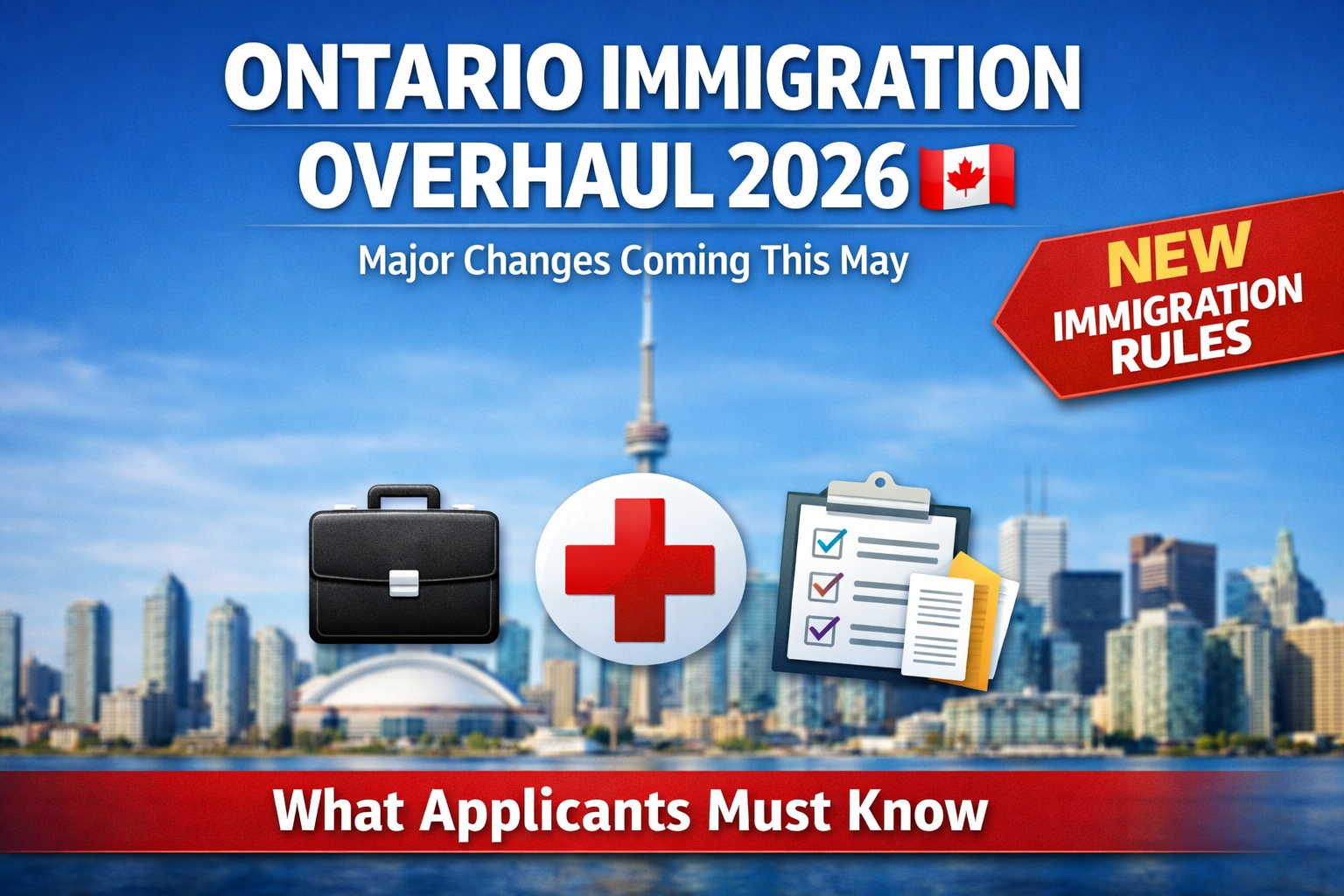
In a breaking update, Ontario has announced plans to completely restructure its immigration system under the Ontario Immigrant Nominee Program (OINP) by the end of May 2026. This overhaul could significantly impact international students, foreign workers, and future immigrants planning to settle in the province.
Here’s everything you need to know.
🚨 What Is Changing in Ontario Immigration?
Ontario is preparing to replace its current immigration streams with a redesigned system that is more targeted and responsive to labour market needs.
Key highlights include:
Removal or restructuring of existing immigration streams
Introduction of targeted draws for specific occupations
Stronger focus on employer-backed applications
New pathways aligned with economic priorities
The province aims to create a more efficient, flexible, and selective immigration system.
🔄 A Shift Toward Targeted Immigration
Instead of broad eligibility categories, Ontario is moving toward a more selective approach.
This means:
Priority will be given to candidates in high-demand sectors
Immigration will be aligned with real labour shortages
Applicants may need stronger profiles to qualify
Ontario is essentially shifting from “open pathways” to “precision-based selection.”
💼 Major Changes to OINP Streams
One of the biggest changes is the complete restructuring of existing streams.
Expected updates include:
Consolidation of multiple streams into fewer categories
Possible elimination of some graduate pathways
Introduction of new streams such as:
Healthcare-focused pathways
High-talent or “exceptional skills” streams
Entrepreneur-focused programs
This reflects Ontario’s goal of attracting job-ready and highly skilled immigrants.
🏢 Employer Verification Will Become Key
A major feature of the new system is mandatory employer verification.
This means:
Employers must prove job offers are legitimate
Applications tied to real labour needs will be prioritized
Fraud prevention and program integrity will be strengthened
This change is designed to ensure that immigration directly supports Ontario’s economy.
🎯 Who Will Benefit the Most?
The new system is expected to favor:
Healthcare professionals (especially licensed workers)
Skilled workers with job offers
Candidates with verified experience and credentials
Individuals who can quickly integrate into the workforce
Meanwhile, candidates relying on general eligibility (e.g., no job offer) may face fewer opportunities.
⚠️ What This Means for Applicants
If you’re planning to immigrate to Ontario, timing and strategy are now more important than ever.
✔ Apply Soon (If Eligible Now)
Existing pathways may be removed or changed—so applying early could be beneficial.
✔ Focus on In-Demand Skills
Candidates in priority industries will have a stronger chance.
✔ Secure a Job Offer
Employer-backed applications will likely become the main pathway.
📅 When Will These Changes Take Effect?
The new system is expected to roll out by the end of May 2026, with more details to be announced in the coming months.
🧠 Final Thoughts
Ontario’s immigration overhaul marks one of the most significant changes in recent years.
The message is clear:
👉 Quality over quantity
👉 Skills over general eligibility
👉 Economic impact over broad intake
For applicants, this means adapting quickly, strengthening profiles, and staying updated with new immigration policies.
📢 Need Help Navigating Canada Immigration?
Stay ahead of the changes. Whether you’re a student, worker, or investor, understanding these updates early can give you a major advantage.