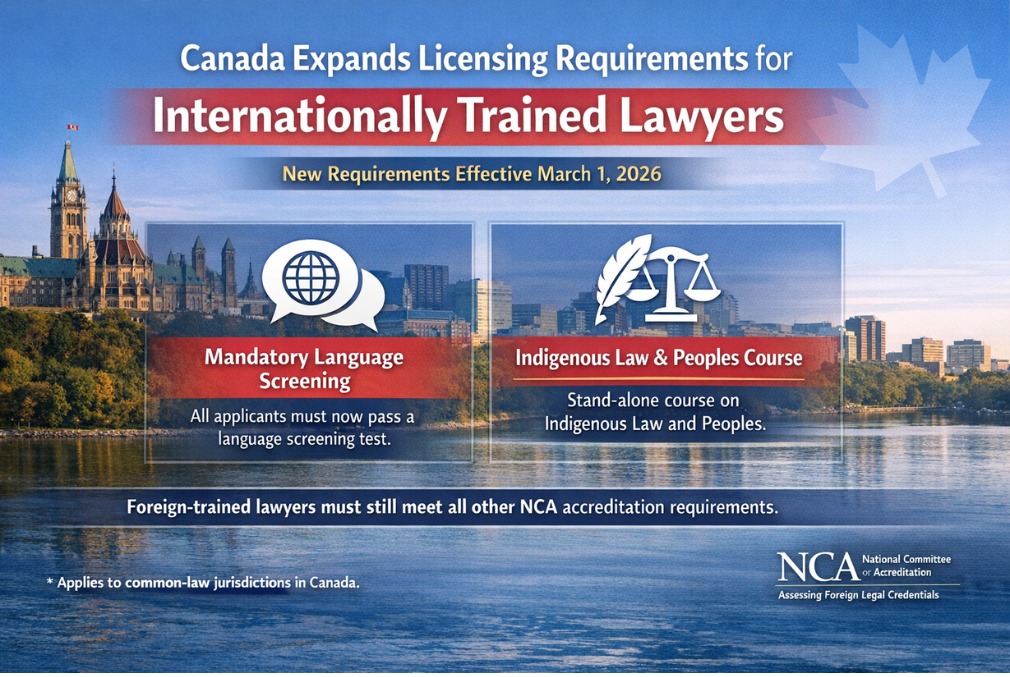
Canada has introduced new requirements for internationally trained lawyers who wish to practice in the country, adding both language and knowledge criteria to the assessment process.
As of March 1, 2026, applicants must complete a mandatory language competency screening in either English or French before their qualifications are assessed.
What’s New?
The updated requirements include:
- A language screening test before application review
- Proof of foundational knowledge of Indigenous law and peoples
- Additional steps if language standards are not met
Previously, language ability was assessed more informally, and there was no requirement related to Indigenous law.
Why These Changes Matter
These updates are designed to ensure that internationally trained lawyers:
- Can effectively communicate in Canada’s legal system
- Understand the country’s legal and cultural context
- Are better prepared for licensing and professional practice
The inclusion of Indigenous law reflects Canada’s ongoing efforts to recognize and integrate Indigenous legal perspectives into the broader legal system.
What Happens If You Don’t Meet the Language Requirement?
If applicants do not meet the required level during the screening, they may need to:
- Take a formal language test
- Meet additional requirements before receiving their qualification
This adds an extra step but ensures fairness and consistency in evaluating candidates.
What Applicants Should Do
If you’re a foreign-trained lawyer planning to practice in Canada, it’s important to:
- Prepare for language testing early
- Understand the new Indigenous law requirement
- Review the updated assessment process
Final Thoughts
Canada’s legal profession continues to evolve, and these new requirements aim to ensure that internationally trained lawyers are well-equipped to succeed.
While the process may now be more structured, it also creates a clearer and more standardized pathway for those pursuing a legal career in Canada.