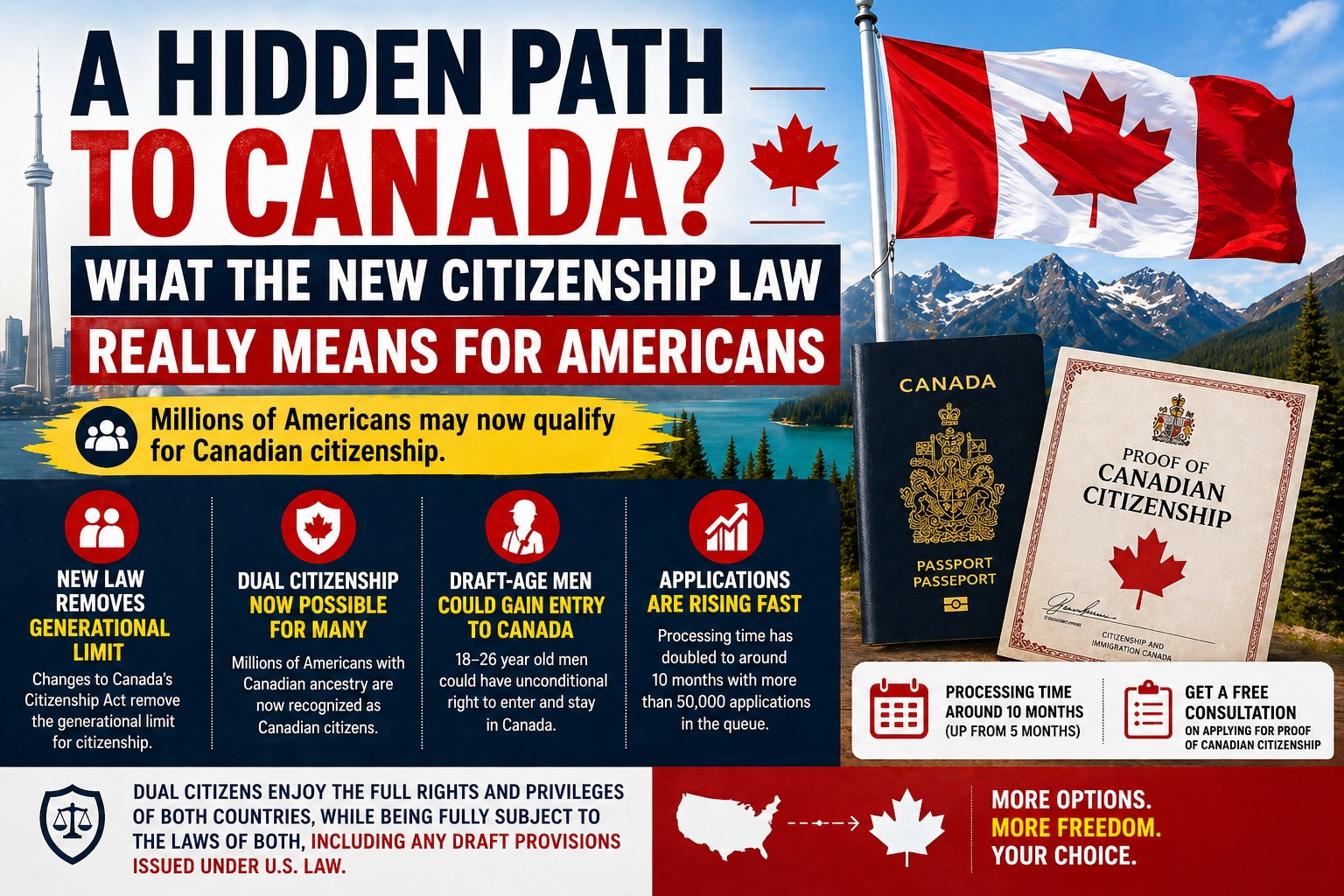
A quiet change in Canada’s citizenship law is starting to spark big conversations—especially in the U.S.
With talks around mandatory draft registration coming back, some Americans are now looking at Canada in a completely different way. And surprisingly, many might already have a legal connection without even realizing it.
So what’s really going on here?
The Big Change You Should Know
In late 2025, Canada updated its citizenship rules and removed a long-standing restriction on citizenship by descent.
Before, if you were born outside Canada, only your parents could pass down citizenship—not your grandparents or earlier generations. Now, that limit is gone.
What does that mean?
If you have Canadian roots—even from generations back—you could already qualify as a Canadian citizen.
No immigration process. No waiting years. Just proof of your family line.
Why This Is Getting Attention in the U.S.
With discussions about the draft coming back, people are naturally exploring their options.
Here’s where things connect:
If someone is recognized as a Canadian citizen, they have the full right to live, work, and stay in Canada. That alone makes this law suddenly very relevant for Americans who may want flexibility in where they live.
But let’s be clear—this isn’t some shortcut designed for draft avoidance.
It’s simply a law that restores citizenship rights to families with Canadian ancestry. The timing just happens to make it more noticeable.
Important Reality Check
Even if you qualify for Canadian citizenship, it doesn’t automatically erase any legal responsibilities you may have in the U.S.
That part is serious.
This is not about “escaping” obligations—it’s about understanding what rights you may already have and how they apply to your situation.
How Do You Know If You Qualify?
It all comes down to your family history.
If you can trace your lineage to a Canadian citizen, you may be eligible. But you’ll still need documents to prove it—like birth certificates across generations.
Once verified, you can apply for proof of citizenship and officially confirm your status.
Final Thoughts
This change isn’t loud—but it’s powerful.
For millions of people, it opens a door that was previously closed. Not because of new opportunities, but because of rights that were always there—just limited by old rules.
And now that those rules have changed, more people are starting to ask the same question:
“Could I already be Canadian?”