Canada is moving faster on immigration again—but this time, the focus is on workers who are already inside the country.
Immigration, Refugees and Citizenship Canada (IRCC) recently confirmed that it is accelerating permanent residence applications through a new initiative aimed at temporary residents already contributing to Canada’s workforce.
What Is the New Initiative?
The program is now being referred to as the “In-Canada Workers Initiative.”
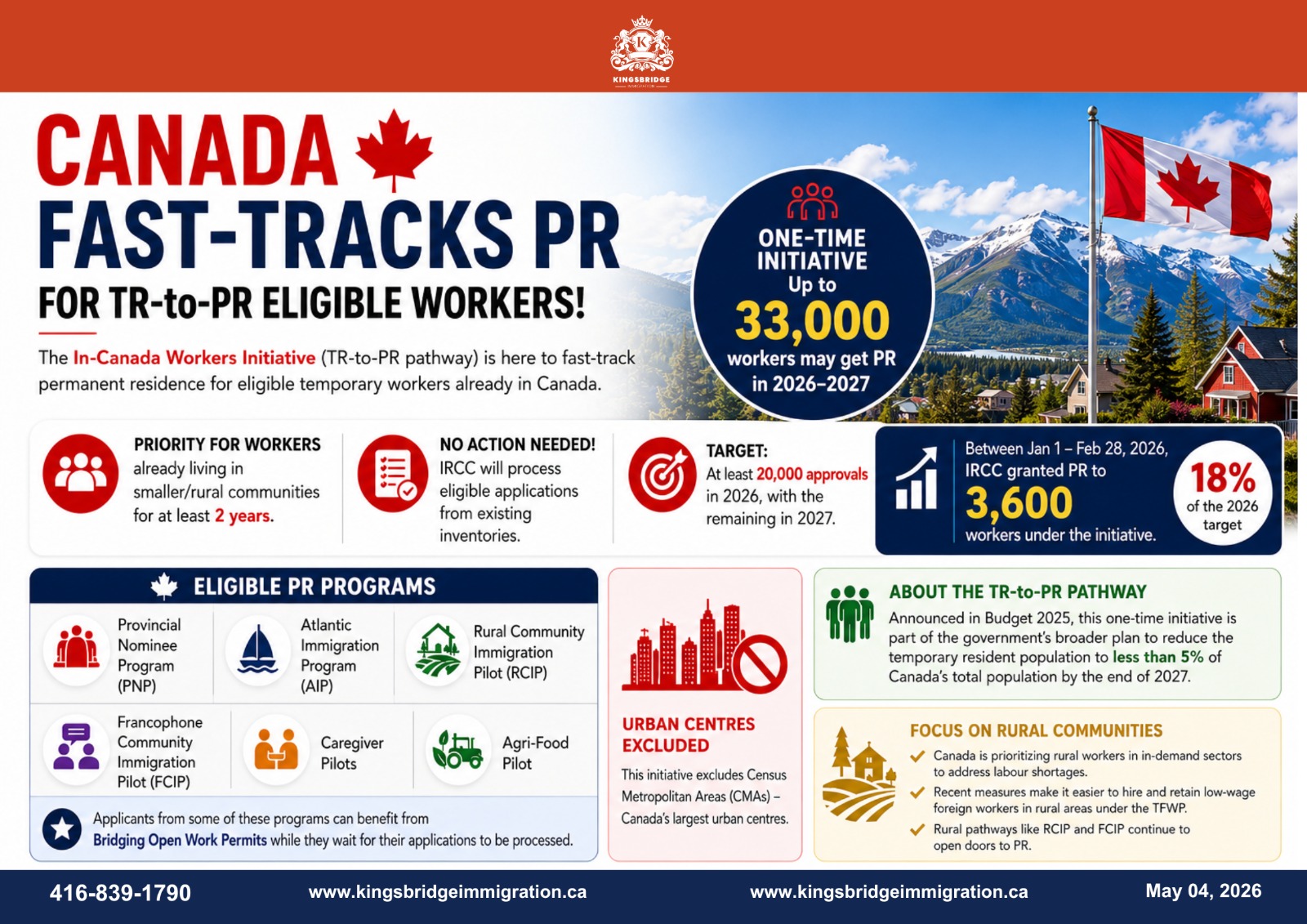
It’s a one-time measure announced as part of Canada’s immigration plans for 2026 and 2027. The goal is to transition up to 33,000 temporary workers into permanent residents over the next two years.
But here’s the important detail many people missed:
This is not a brand-new immigration stream where anyone can apply.
Instead, IRCC is currently focusing on speeding up PR applications that were already submitted through existing immigration programs.
Who Is Being Prioritized?
According to the latest updates, the initiative is targeting workers who:
- Already applied for permanent residence
- Have been living in smaller or rural Canadian communities for at least two years
- Are already contributing to Canada’s economy and workforce
Eligible applicants may come from programs such as:
- Provincial Nominee Program (PNP)
- Atlantic Immigration Program
- Caregiver pilots
- Agri-Food Pilot
- Other regional immigration pathways
No New Application Needed
One of the biggest surprises is that many workers do not need to submit a new application.
IRCC is reviewing existing files and accelerating eligible cases internally.
That means some applicants could see faster processing without reapplying under a separate program.
How Many Have Been Approved So Far?
IRCC confirmed that between January and February 2026 alone, around 3,600 workers already received permanent residence through this initiative.
The government says it remains on track to meet its larger target over the next two years.
Why Canada Is Doing This
This reflects a bigger shift in Canada’s immigration strategy.
Instead of relying heavily on new applicants from outside the country, Canada is now prioritizing people who:
- Already have Canadian work experience
- Are paying taxes
- Have settled into communities
- Are helping fill labour shortages
In short, Canada wants to retain workers who are already established and contributing.
Final Thoughts
For many temporary residents in Canada, this update is a major development.
While it’s not the same open TR to PR pathway people saw in 2021, it still creates a real opportunity for workers whose applications are already in the system.
And with Canada continuing to focus on in-country applicants, temporary workers may become an even bigger priority in the years ahead.