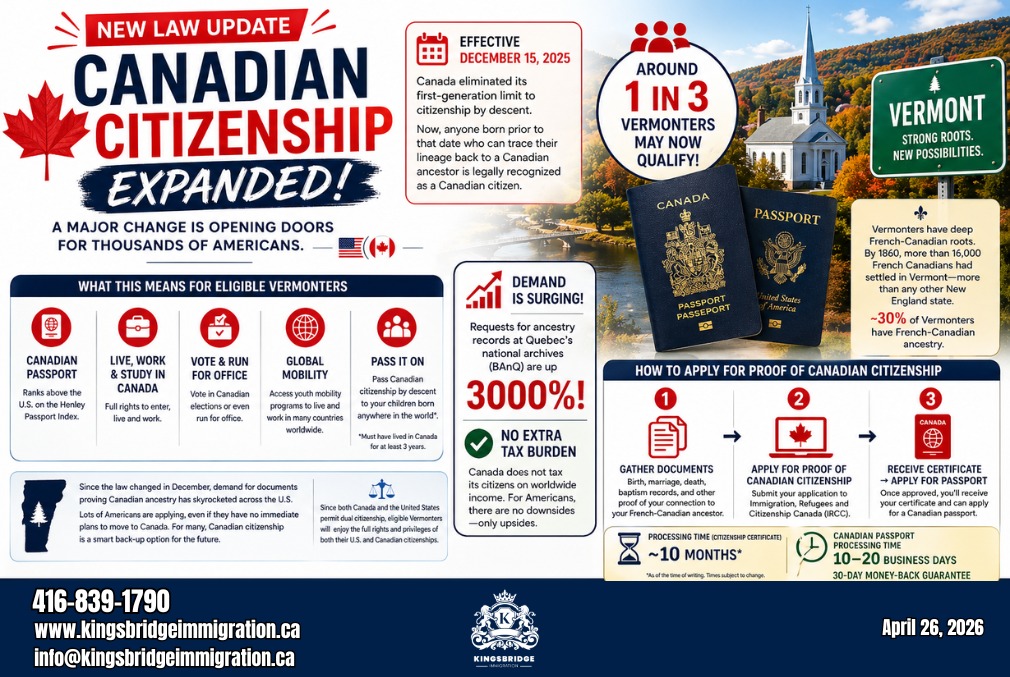
A recent change in Canada’s citizenship law is making headlines—and for good reason.
For many Americans, especially those living near the border in places like Vermont, this update could mean something unexpected: the possibility of qualifying for Canadian citizenship—and even a Canadian passport—through family ties.
But what does this really mean?
What Changed?
In late 2025, Canada officially updated its citizenship rules, removing the long-standing first-generation limit on citizenship by descent.
Before this change, if you were born outside Canada, only your parents could pass down citizenship. If your Canadian connection came from a grandparent or earlier, you were typically not eligible.
Now, that restriction has been lifted.
This means citizenship can now extend beyond just one generation—opening the door to thousands of people who were previously excluded.
Why This Matters for Americans
This update is especially relevant for Americans with Canadian ancestry.
In northern U.S. states like Vermont, many families have deep cross-border roots. Because of that, a significant number of people may now qualify for Canadian citizenship—even if they’ve never lived in Canada.
And once citizenship is confirmed, individuals can apply for a Canadian passport, which allows them to live, work, and travel freely as Canadian citizens.
A Key Detail Most People Miss
One important thing to understand is this:
This is not a “new immigration program.”
If you qualify under the updated law, you’re not applying to become a citizen—you’re applying for proof of citizenship for a status you may already have by law.
In many cases, that citizenship is considered automatic, especially for those who were previously affected by the old rule.
What You Need to Qualify
Eligibility depends on your family history.
To qualify, you typically need to:
- Show a direct line of descent from a Canadian citizen
- Provide documents like birth certificates across generations
- Confirm that your Canadian ancestor was a citizen by birth or naturalization
Because the law now allows citizenship to pass through multiple generations, even those with Canadian grandparents—or beyond—may now be included.
Final Thoughts
This change may seem quiet—but it’s a big shift.
For many people, especially those with cross-border family ties, it opens a door that was previously closed. Not because the opportunity is new, but because the law finally recognizes rights that were once limited.
And now, more people are starting to realize:
They may already be Canadian.