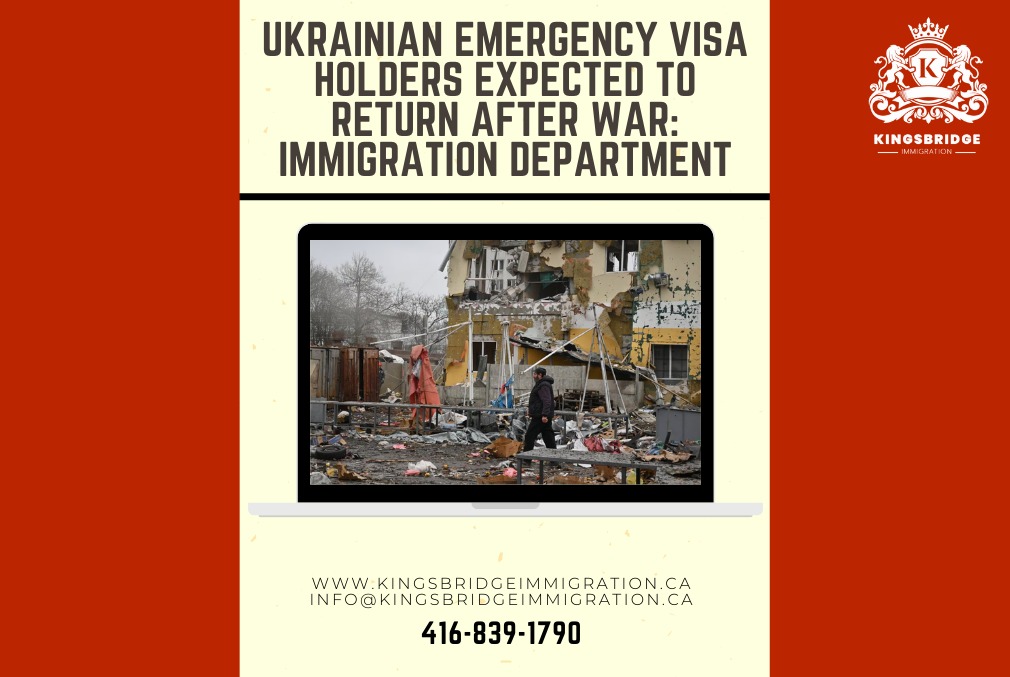
More than four years after Russia’s full-scale invasion of Ukraine, Canada is once again making headlines over its policy toward Ukrainians who sought refuge here under a special emergency visa program.
Canada says that Ukrainians who arrived under the Canada-Ukraine Authorization for Emergency Travel (CUAET) — a program that gave temporary work and study permits — are expected to return home once the war is over. That statement from Immigration, Refugees and Citizenship Canada (IRCC) has sparked debate, especially amid calls for clearer pathways to permanent residence.
What the Government Is Saying
According to Canadian press, officials stress that the CUAET visas were designed as temporary protection — meaning they are not automatically a route to permanent residency. IRCC’s communications director reiterated that the expectation remains: once it is safe for Ukrainians to return to Ukraine, they should plan to do so.
That message comes even after recent comments from Immigration Minister Lena Diab, who acknowledged that many Ukrainian newcomers have built lives here — working, raising families, and contributing to communities across Canada.
Who’s Here and What Their Status Is
Under the CUAET program, nearly 300,000 Ukrainians entered Canada, receiving temporary work and study rights and access to certain settlement services alongside those normally available to refugees.
However, that temporary status comes with uncertainty:
CUAET visas were offered with a three-year validity and can be extended while applications are processing.
Some Ukrainians have already applied for permanent residency through existing channels, and about 2,500 have been granted PR status, according to IRCC data.
A special temporary stream that allowed family-linked permanent residence applications has since closed, although other traditional immigration programs remain open.
Calls for a Clearer Path to Stay
Advocacy groups like the Ukrainian Canadian Congress say the current situation leaves many in limbo. They argue that after years of living, working, and contributing in Canada — often unable to safely return home — these temporary residents deserve a clearer and fairer route to permanent residence.
Many Ukrainians don’t qualify under Canada’s points-based immigration system, meaning they “fall through the cracks” despite strong ties to their communities in Canada. Supporters of a dedicated PR pathway argue this would reflect both humanitarian values and the realities of long-term displacement.
What This Means for Ukrainian Individuals and Families
For Ukrainians currently in Canada on CUAET status, the situation has several key implications:
Return expectations: The government is signalling that once it’s safe, many temporary visa holders are expected to consider returning home — even if many want to stay.
Permanent residence: Those wishing to stay permanently must navigate existing immigration streams — which can include family-sponsored, skilled worker, or provincial nominee programs.
Policy uncertainty: With permanent resident targets being lowered and lengthy processing times for humanitarian cases, the debate between temporary protection and long-term settlement continues.
A Moment of Transition
As the war in Ukraine continues, what happens next for people under the CUAET program is still being debated — by officials, advocacy groups, and the Ukrainian-Canadian community.
Some see Canada’s current stance as an attempt to balance humanitarian support with immigration policy norms. Others argue that after years of uncertainty, many Ukrainians have already made Canada home and deserve stable, long-term status.
Either way, the situation highlights a much bigger question: how temporary protection programs evolve into lasting solutions for people displaced by prolonged conflicts.